1. Warm-Up: From Land to Sea
Objective: To activate prior knowledge and understanding of the ocean’s role in regulating Earth’s climate.

Climate Introduction
Ask students why Earth’s climate is "just right" compared to the extreme temperatures of Venus or Mars. Ask for suggestions as to what regulates temperature. Allow discussion about global warming and temperature changes as a result of pollution.
Reveal or confirm that Earth’s interconnected ocean system absorbs more than 90% of Earth’s extra heat.
Make a Prediction
Ask students to imagine the ocean functioning like a giant battery, which charges as energy (heat) flows into it. What would happen to the charge of the battery as energy increases? And therefore what might happen as we add more CO2 to Earth’s atmosphere?
Bridge the Gap
Explain that the ocean is a single living system where currents, wildlife, and climate interact to sustain life — and that human impacts have more knock-on effects than global temperature changes and rising sea levels.
2. Investigate: Our Interconnected Oceans
Objective: To introduce the concept of the ocean as an interconnected network of ecosystems.

Introduce the Oceans Challenge
Explain that students will now embark on a journey across five oceans and investigate how marine life in each region — from carbon cycles to food webs — influences the stability of our global climate.
3. Environmental Innovation: Invention Elevator Pitch
Objective: Work as a team of "Bio-Engineers" to design a nature-inspired technology that removes or prevents ocean pollution.

Divide the class into small teams. Their mission is to design a technological adaptation that helps tackle ocean pollution. They should invent an engineering solution using the concept of biomimicry (when we look to nature for engineering inspiration) teams must "invent" a creative solution to ocean pollution.
Explain to students that biomimicry is the practice of looking at how plants, animals, and ecosystems solve problems and "copying" those designs for human inventions. If they’re struggling to conceptualise the task, provide the following examples:
A filter inspired by a Basking Shark’s mouth to catch microplastics.
A surface coating inspired by Shark Skin that prevents bacteria or waste from sticking to ships without using toxic chemicals.
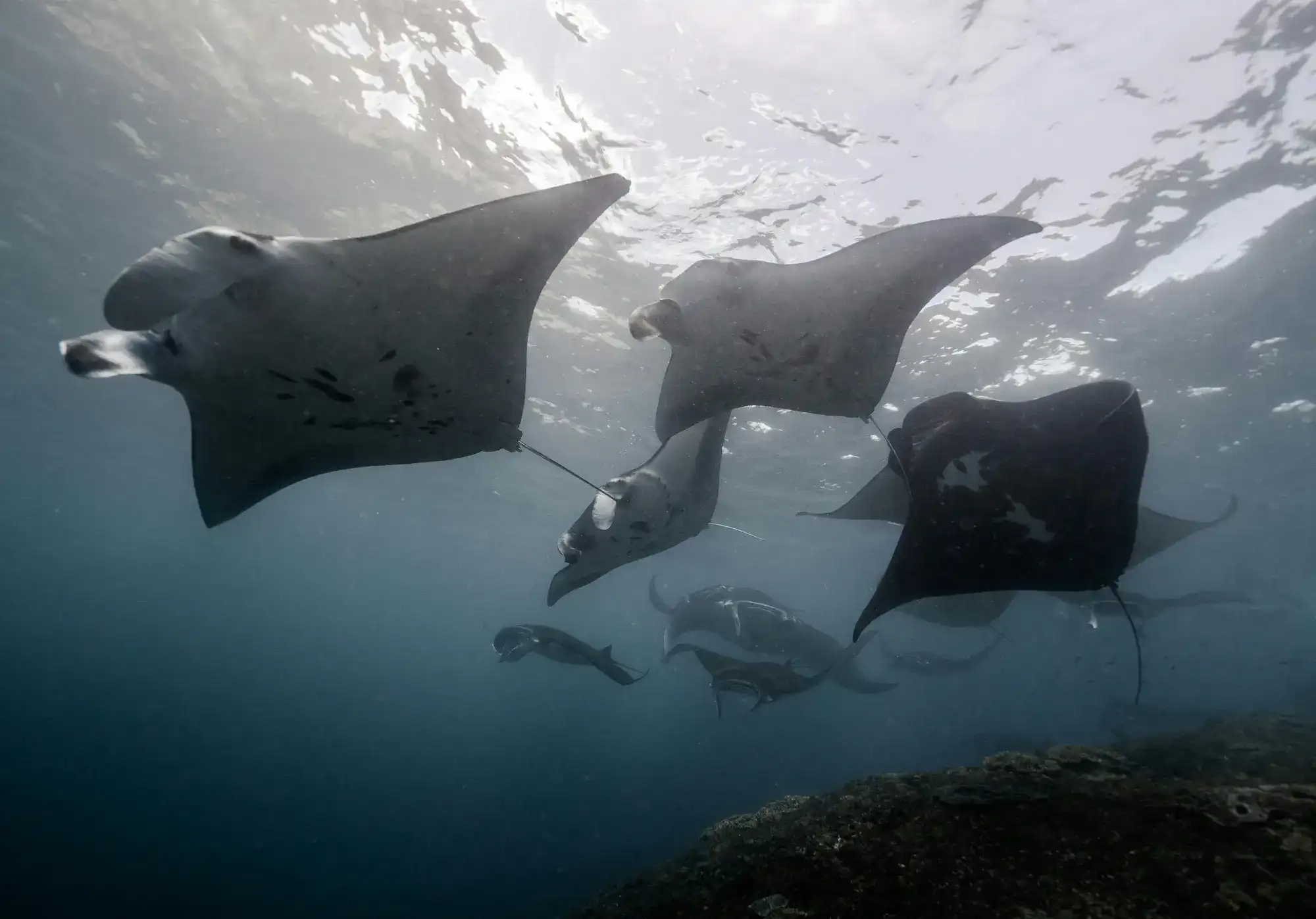
A floating "collector" inspired by the way Manta Rays filter food from the water.
Remind students to be creative! Their invention doesn't have to exist yet—it just has to be inspired by a real biological process.
Elevator Pitch Framework
To help them make their case, teams can use the following three-part structure:
The Problem: "Currently, our oceans are facing a crisis with [Type of Pollution: e.g., Microplastics, Oil Spills, Ghost Nets]. This is a disaster because it [Specific Impact: e.g., enters the food chain / destroys coral reefs]."
The Solution: "Our invention is the [Name of Invention]. We looked at how a [Specific Animal or Plant] handles [Action: e.g., filtration/movement/protection] and copied it. Our device works by..."
The Systems Impact: "This does more than just clean the water; it restores the balance of the [Ecosystem/Human Health/Economy] by ensuring that..."
Pitch the Idea
Teams have 60 seconds to deliver an "Elevator Pitch" to the rest of the class.
4. Quickfire Quiz
Q1. Which ocean “zone” contains the most marine life?
A1. The Sunlight (Epipelagic) Zone.
Explain: While the ocean is incredibly deep, about 90% of marine life lives in the top 200 meters where sunlight allows photosynthesis to occur.
Q2. The ocean acts as the planet’s "heart." What is the name of the global system of currents that moves heat around the world?
A2. The Global Ocean Conveyor Belt (Thermohaline Circulation).
Explain: This system is driven by temperature and salinity; it regulates our climate by transporting warm water from the equator to the poles.
Q3. Phytoplankton are microscopic, but they are the lungs of the planet. Roughly what percentage of Earth's oxygen do they produce?
A3. At least 50% (some estimates say up to 80%).
Explain: Through photosynthesis, these tiny organisms produce more oxygen than all the world's rainforests combined.
Q4. What is the "Twilight Zone" of the ocean, and why is it important for the planet’s carbon cycle?
A4. The Mesopelagic Zone (200m–1,000m).
Explain: This area is home to billions of animals that migrate to the surface at night to feed and then swim back down, effectively "pumping" carbon from the atmosphere into the deep ocean.
Q5. Hydrothermal vents were only discovered in 1977. How do creatures survive there without any sunlight?
A5. Chemosynthesis.
Explain: Instead of using sunlight, bacteria at these vents convert chemicals (such as hydrogen sulfide) from Earth's crust into energy, supporting an entire ecosystem in total darkness.
Q6. What are the three most significant human-made threats facing the global ocean today?
A6. Climate change (warming/acidification), Plastic pollution, and Overfishing.
Explain: These "triple threats" disrupt the ocean's ability to regulate the environment and sustain food chains.
Q7. "Blue Carbon" is a term used in climate science. What does it refer to?
A7. Carbon that is captured and stored by coastal and marine ecosystems.
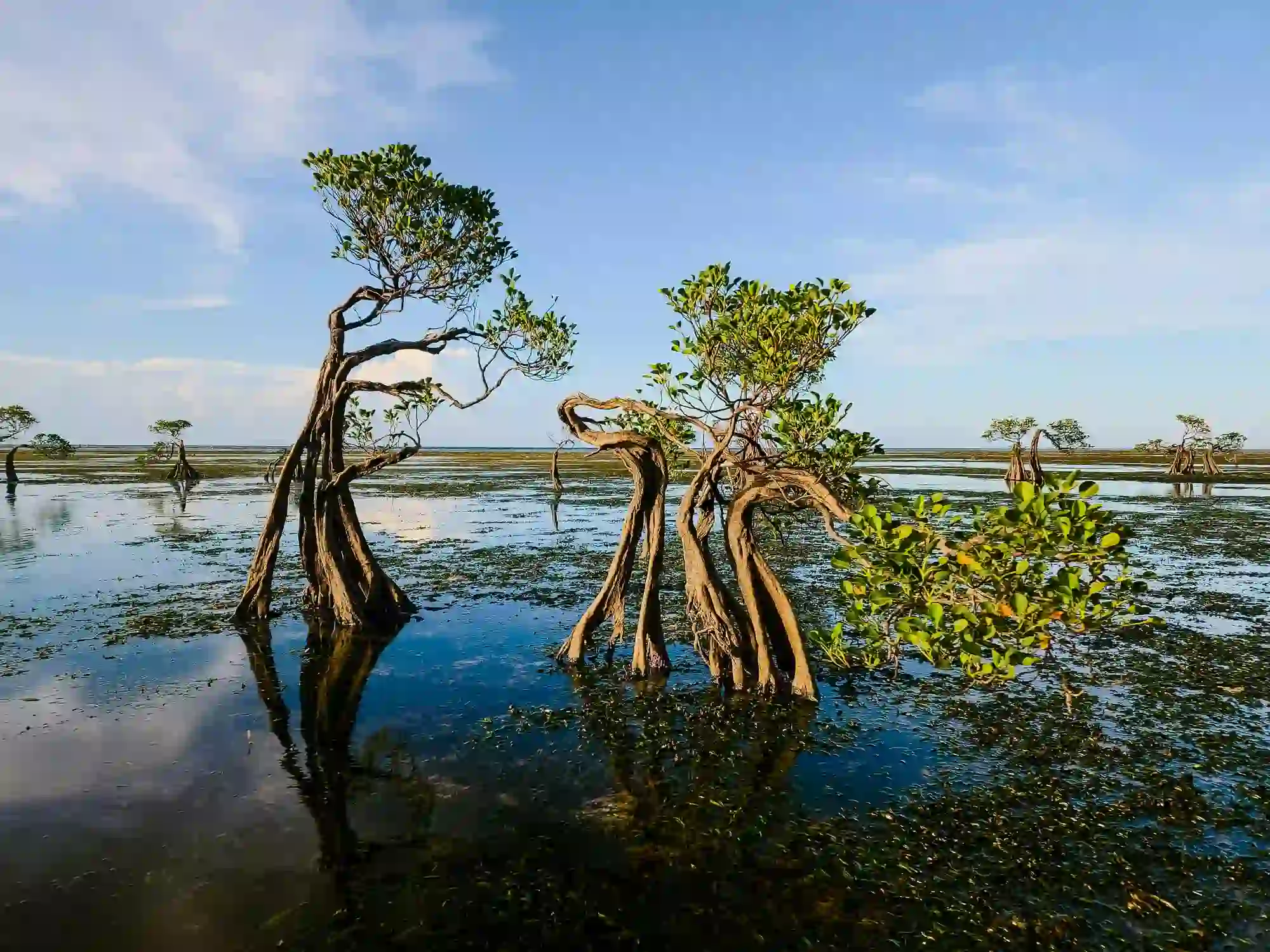
Explain: Mangroves, seagrasses, and salt marshes are up to 10 times more efficient at absorbing carbon than tropical forests.
Q8. The "Abyssal Plain" covers more than 50% of the Earth’s surface. What is it?
A8. The vast, flat, sediment-covered area of the deep ocean floor.
Explain: It is one of the least explored places on Earth and home to unique, pressure-resistant life forms such as the tripod fish and sea cucumbers.
Q9. What happens to the ocean's chemistry when it absorbs too much Carbon Dioxide?
A9. Ocean Acidification.
Explain: As the ocean absorbs CO2, the pH of the water drops, making it harder for corals and shellfish to build their calcium carbonate skeletons and shells.
Q10. What is "The Great Ocean Garbage Patch," and where is the largest one located?
A10. A massive collection of floating plastic and debris; The North Pacific Ocean.
Explain: Ocean currents (gyres) trap millions of tons of plastic in specific areas, creating "plastic soups" that harm marine life.
5. Plenary: Practical Application & Systems Thinking
Objective: Consolidate learning by recognizing the ocean as Earth’s primary life-support system and empowering students to identify "high-leverage" solutions.

Consolidate Learning
Reiterate that the ocean has been the "Blue Heart" of our planet for over 4 billion years, regulating our climate, providing half our oxygen, and feeding billions. However, this system is now under pressure from human activity.
Pose this reflection question to students in pairs:
"If the Earth is a giant spaceship and the ocean is the life-support system, how can our 'Global Crew' work together to fix the leaks and keep the engines running for the next million years?"
Reflect Using Systems Thinking
Discuss the "invisible threads" that connect our daily lives to the deep sea. Use the concept of Interconnectedness:
Energy Systems: How burning fossil fuels on land leads to Ocean Acidification and coral bleaching.
Global Shipping: How our demand for products creates underwater Noise Pollution that disrupts whale communication.
Waste Streams: How a plastic bottle in a local park can become Microplastic in the deepest parts of the Mariana Trench.
Identifying Lever Points
In systems thinking, a "Lever Point" is a small place in a system where a small change can produce a big, positive result.
Ask students to identify and explain one lever point.
Example: If we protect Mangroves (the lever), we store more carbon, protect coastlines, and provide a nursery for fish all at once.
Example: If we switch to Circular Packaging, we stop the flow of plastic at the source rather than trying to vacuum the whole ocean.
6. Real-World Citizen Science
Objective: To transform classroom knowledge into active environmental stewardship.

Carbon Detectives
Oceans store carbon in "blue carbon" ecosystems like seagrass and kelp forests. Research a local "blue carbon" project or a habitat restoration effort (like salmon return or coral recovery) and share its success with your school.
Ocean Observers
Become amateur marine biologists by contributing to scientific databases that track marine populations and ocean health!
If you live near the coast, use apps like Shorewatch (in Scotland) or WhaleReport to log sightings of dolphins and other marine life. This data helps scientists identify behavioural shifts and population changes.
Spotless Sands
Plastic pollution often begins miles away from our beaches, across towns and cities, and around countryside beauty spots. We can all do our bit to help improve our environment. Wherever you live, organise a local litter pick. Removing plastic from local green spaces and drains helps prevent it from reaching the ocean, where it will harm marine life through ingestion or entanglement.
Persistent Plastic Pollution
Do you notice the same plastic items littering the park over and over again? Are there single-use plastics at school that don’t always make it into the recycling bin, which could be replaced with more sustainable alternatives?
If there are specific single-use plastic items, such as disposable cutlery, which you think might be a persistent problem, lead a student campaign to enact the change you want to see in your school community.