Core Themes
Evolution
Adaptation
Global Conservation
1. Warm-Up: From Land to Sea
Objective: To activate prior knowledge and prepare to identify mammalian traits, as well as predict possible evolutionary changes.

Mammalian introduction
Begin a brief class-wide discussion by asking students to identify three things humans and dogs have in common (e.g., breathing air, giving birth to live young, having hair/fur).
Watch the "Meet the Dolphins" Video
Watch the “Meet the Dolphins” video. At the end, show the Ambulocetus image (an early dolphin ancestor) to prompt discussion.
Make a Prediction
Ask your learners: "If this land animal wanted to journey into the deep ocean to find food, what three body parts would have to change the most?"
Bridge the Gap
Explain that dolphins aren't just "fish-shaped animals", but mammals that underwent a massive transition — a little bit like a "career change" — from land to water.
Now watch how the 'familiar' dolphin we know today actually belongs to a much larger, more diverse family tree that started on land…
2. Discuss: Species Adaptations
Objective: Introduce learners to evolutionary adaptations and dolphin species diversity.

Watch the "The Transformers" Video
Pay close attention to any evolutionary changes mentioned (flippers, flukes, and blowholes) and species diversity.
Dive into Species Adaptations
Begin your discussion with the idea that evolution has taken place over the course of millions of years.
If human impacts continue to change dolphin habitats (like noise pollution and rising temperatures), do you think they will continue to "adapt"?
What might adaptations look like? (Guide discussions to consider behaviours, habits, physical features, and physiological abilities)
Do you think dolphins can adapt quickly to the effects of climate change?
What might happen to our ocean ecosystems if human impacts and climate change continue to affect dolphins?
Explain that students will now investigate human impacts on dolphin adaptations and their survival, and evaluate current conservation efforts and protection strategies across our interconnected ocean.
3. Adaptation Innovation: Invention Elevator Pitch
Objective: Design an adaptation that helps tackle a specific human-led threat.

Divide the class into small teams. Their mission is to design a technological adaptation that helps tackle a specific human-led threat. They should invent an adaptation using the concept of biomimicry (when we look to nature for engineering inspiration) teams must "invent" an adaptation.
Elevator Pitch Framework
To help them make their case, teams can use the following three-part structure:
The Problem: "Dolphins in [their ocean] are currently struggling with [threat] because...".
The Solution: "Our technological adaptation is [Name of Invention], which works by...".
The Systems Impact: "This doesn't just save dolphins; it helps the environment/humans/whole ocean by..."
Pitch the Idea
Teams have 60 seconds to deliver an "Elevator Pitch" to the rest of the class.
4. Investigate: Become Dolphin Defenders
Objectives: Help students develop systems thinking by understanding how human actions such as bycatch and pollution affect dolphins, their echolocation, their social groups, and worldwide populations.

Explore the Dolphin Defender Learning Pathway
Invite your students to create an ITZA account and begin exploring itza.io.
Direct students to explore Dolphin Defenders on ITZA and encourage them to explore the content that sparks their personal curiosity most.
Ask students to make five observations about dolphin adaptations — whether behaviourally, physiologically or structurally — across the site content.
At the end of the session, ask for volunteers to share their findings with the class or in groups.
Note: Learners who complete the Dolphin Defender learning pathway will earn their official WDC-endorsed Credential!
Dive into Species Adaptations
Begin your discussion with the idea that evolution has taken place over the course of millions of years.
If human impacts continue to change dolphin habitats (like noise pollution and rising temperatures), do you think they will continue to "adapt"?
What might adaptations look like? (Guide discussions to consider behaviours, habits, physical features, and physiological abilities)
Do you think dolphins can adapt quickly to the effects of climate change?
What might happen to our ocean ecosystems if human impacts and climate change continue to affect dolphins?
Explain that students will now investigate human impacts on dolphin adaptations and their survival, and evaluate current conservation efforts and protection strategies across our interconnected ocean.
5. Quickfire Quiz
Q1. Which ancient ancestor is widely recognized as a land-dwelling predecessor to modern dolphins, showing how they transitioned from land to sea?
A1. Ambulocetus
Explain: This ‘walking whale’ is a key transitional fossil which evidences the early stages of mammalian movement from land into the water.
Q2. What came before the blowhole evolutionary adaptation and where did it move from?
A2. Nostrils moved from the snout.
Explain: This adaptation allows dolphins to break the surface and breathe efficiently without stopping their forward momentum.
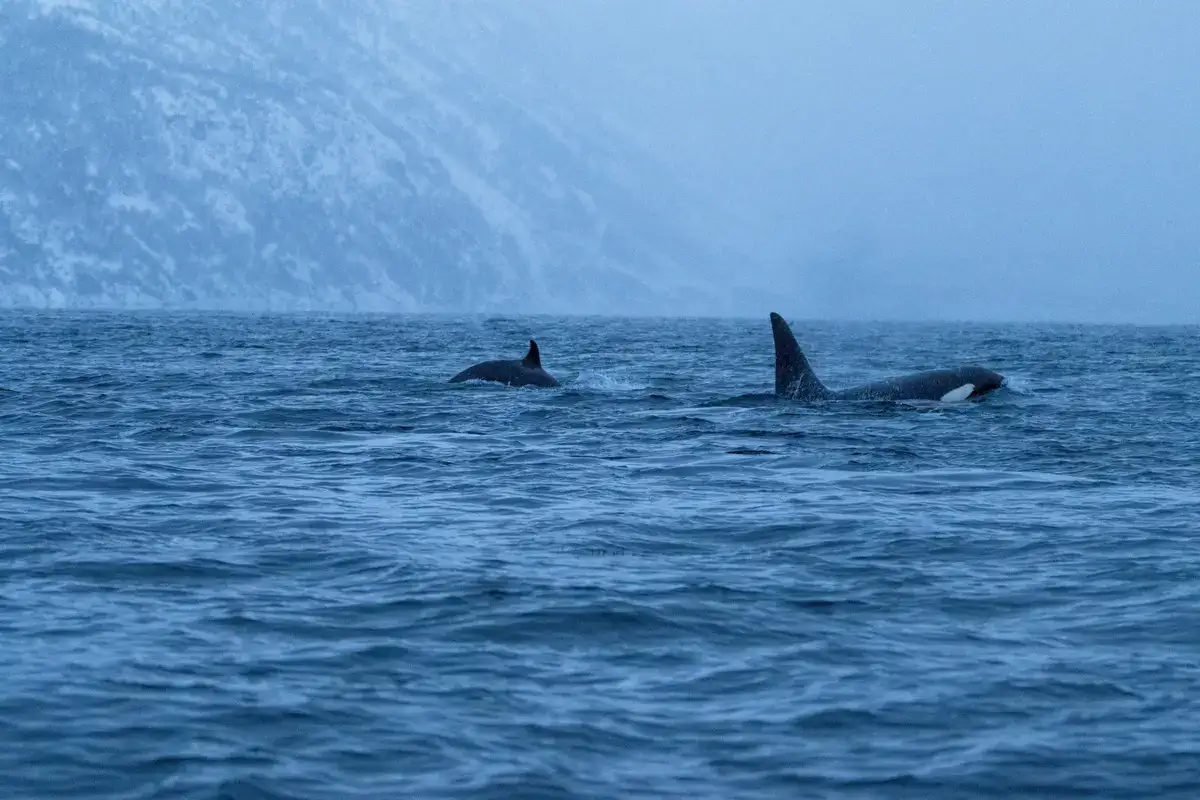
Q3. Which “whale” is actually a member of the dolphin family, despite its common name?
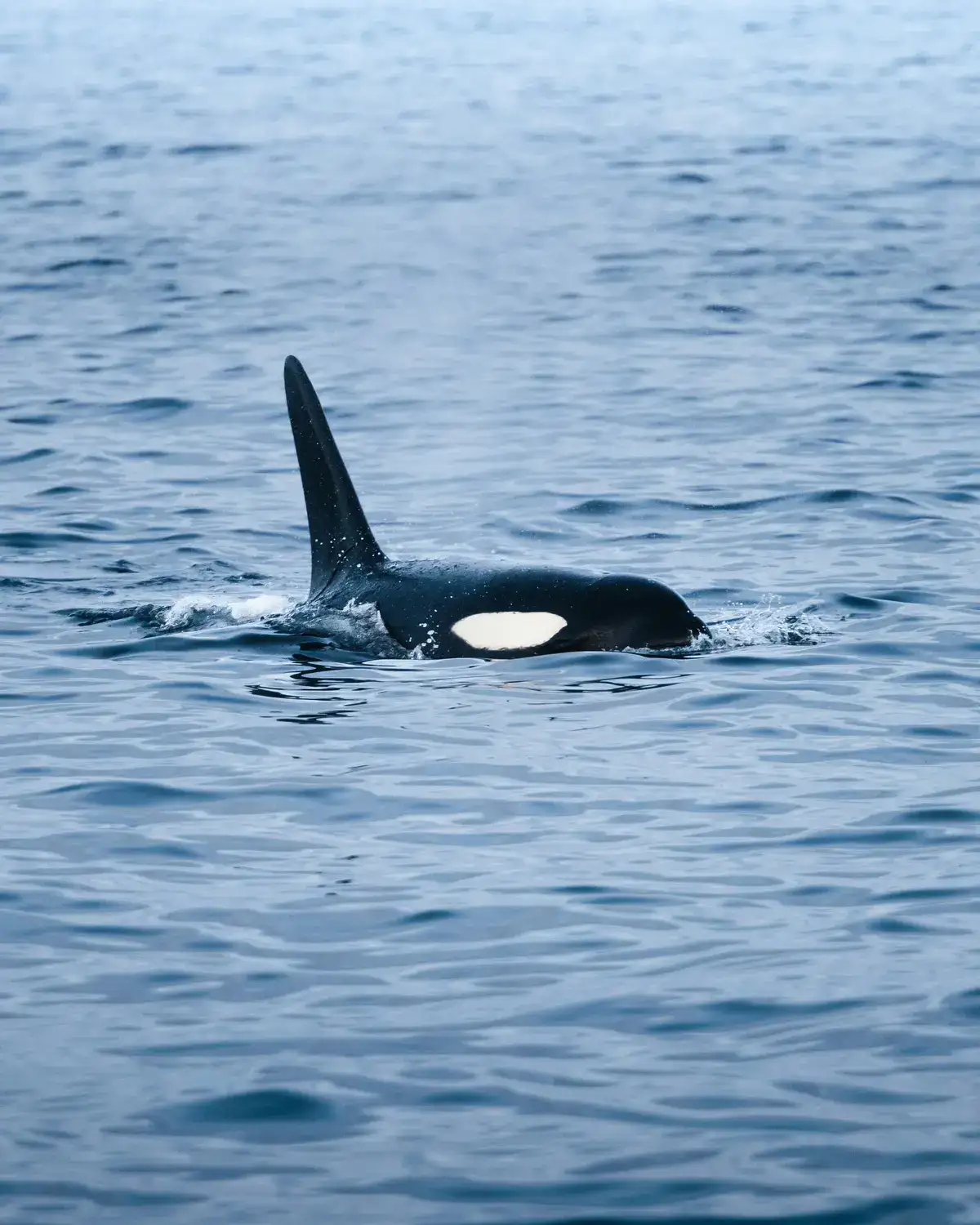
A3. Killer Whale (Orca)
Explain: Orcas are the largest members of the dolphin family and share the same biological lineage as smaller dolphins. It is believed their colloquial name comes from humans observing them hunting; “whale killers”.
Q4. What primary biological characteristics confirm dolphins are mammals and not fish?
A4. They breathe air and birth live offspring
Explain: These are the core traits that dolphins share with humans and other land mammals.
Q5. What is the primary function of the dolphin's fluke during swimming?
A5. To provide powerful propulsion
Explain: The fluke moves up and down to drive the dolphin forward through the water with great force.
Q6. Can you name 3 major human impacts threatening dolphin survival?
A6. Plastic pollution, bycatch from industrial fishing, and climate change altering ocean temperatures
Explain: Plastic can harm dolphins through ingestion or entanglement, dolphins can get caught in industrial fishing lines causing them to drown, and ocean climates changing cause habitat disruptions. Human impacts have a dynamic effect on dolphin survival.
Q7. Dolphins use 'echolocation' to navigate and hunt. Which part of their body is critical for receiving these sound returns?
A7. The jawbone
Explain: The dolphin’s lower jaw is filled with fat that conducts sound waves directly to the middle ear.
Q8. What is the term for the social groups that dolphins live in?
A8. Pods
Explain: Pods are highly social units where dolphins cooperate, communicate, and pass on learned behaviours.
Q9. How do Marine Protected Areas (MPAs) help protect dolphins?
A9. They restrict harmful human activities like industrial fishing
Explain: Limiting human impacts reduces pollution and allows habitats to recover as well as reducing the risk of bycatch.
Q10. Dolphins are known for their 'fuel economy' in the water. Which physical adaptation helps them reduce drag and swim more efficiently at high speeds?
A10. Flexible, compliant skin
Explain: Dolphins have specialized skin that can dampen turbulence in the water, significantly reducing drag as they move.

6. Plenary: Practical Application & Systems Thinking
Objective: To consolidate learning and empower learners to see themselves as change-makers.

Consolidate Learning
Reiterate that dolphin pods have relied on complex social bonds and cultural learning to survive and evolve across the last 50 million years. Then, pose the question to students in pairs:
How can our "human pod" work together to ensure their story continues for another 50 million years?
Reflect Using Systems thinking
Discuss the dynamic interactions that take place across human energy systems, shipping, pollution, and marine ecosystems.
Ask students to identify one "lever point" where human action can restore balance to entire ecosystems.
Prompt volunteers to share conservation ideas, based on their new knowledge, that could drive policy change or local community action.
7. Real-World Activities: Citizen Science
Objective: To ground learning in the real-world and transform knowledge into active engagement.

Divide the class into small teams. Their mission is to design a technological adaptation that helps tackle a specific human-led threat. They should invent an adaptation using the concept of biomimicry (when we look to nature for engineering inspiration) teams must "invent" an adaptation.
Ocean Observers
Become amateur marine biologists by contributing to scientific databases that track dolphin populations and health!
If you live near the coast, use apps like Shorewatch (in Scotland) or WhaleReport to log sightings of dolphins and other marine life. This data helps scientists identify behavioural shifts and population changes.
Spotless Sands
Plastic pollution often begins miles away from our beaches, across towns and cities, and around countryside beauty spots. We can all do our bit to help improve our environment. Wherever you live, organise a local litter pick. Removing plastic from local green spaces and drains helps prevent it from reaching the ocean, where it will harm dolphins and other ocean life through ingestion or entanglement.
Persistent Plastic Pollution
Do you notice the same plastic items littering the park over and over again? Are there single-use plastics at school that don’t always make it into the recycling bin, which could be replaced with more sustainable alternatives?
If there are specific single-use plastic items, such as disposable cutlery, which you think might be a persistent problem, lead a student campaign to enact the change you want to see in your school community.